Same length, lawful transit
Length alone never names a boat; it is filed, not boarded.
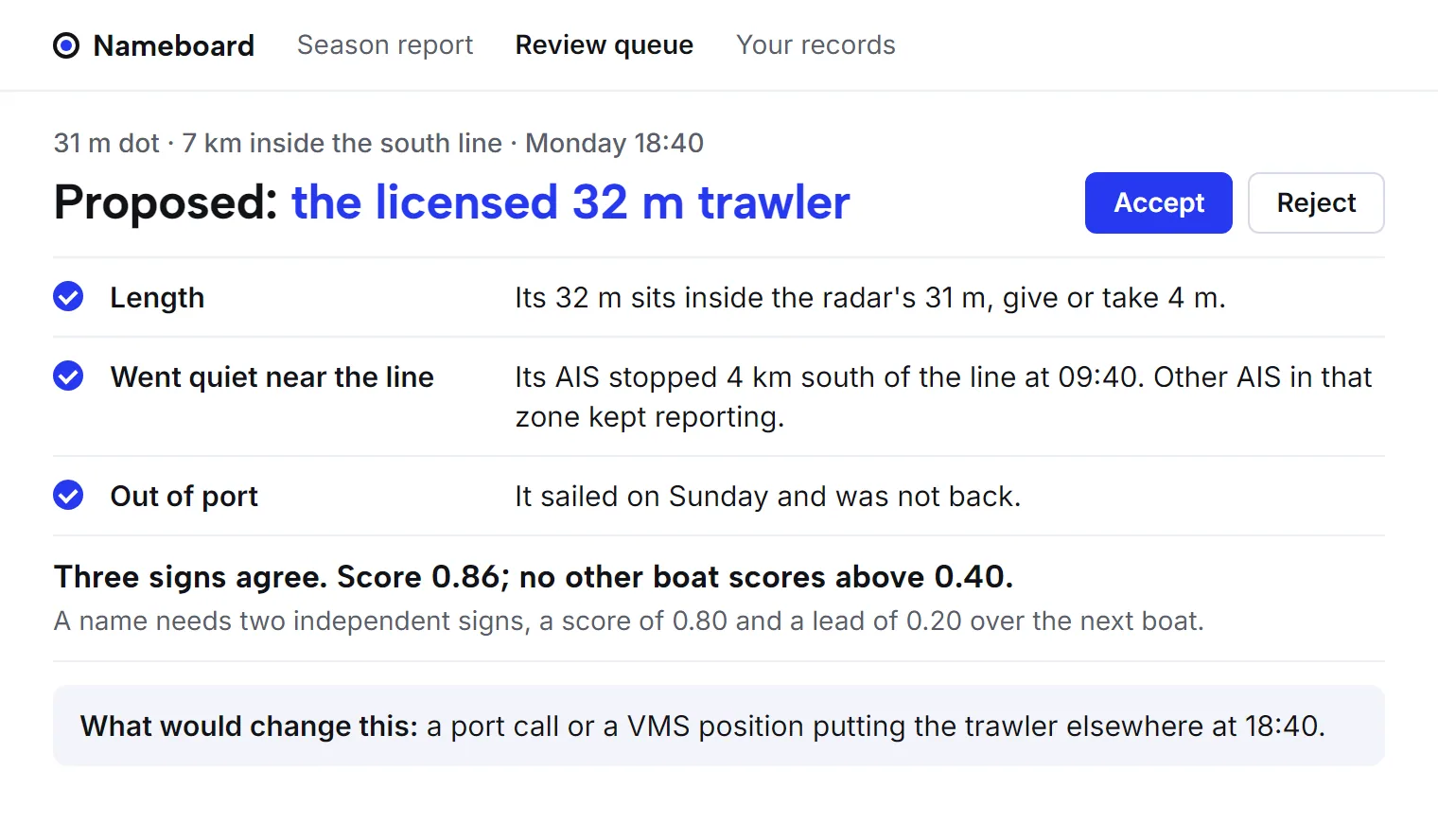
Two models we trained ourselves: one decides which radar targets are boats and measures them, the other ranks the boats each dot could be. Each proposal names the one record that would change it.
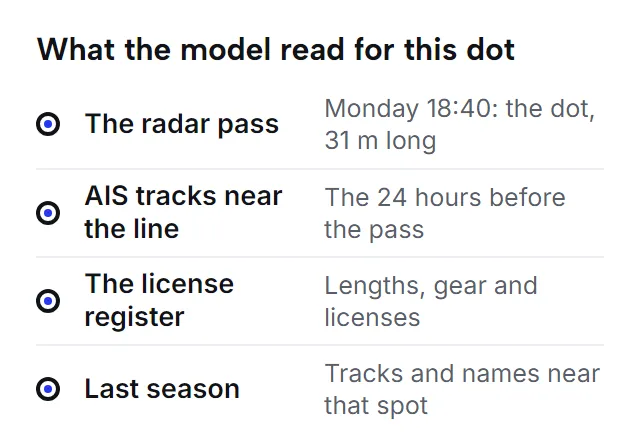
The dot's radar length, AIS near the line, your register, past seasons.
The signs behind the boat, or which of six reasons applies.
Whether to board, and anything outside your area.
A name takes two independent signs on one boat, a score of 0.80 and a lead of 0.20 over the next. Short of that you see no name, and the reason.
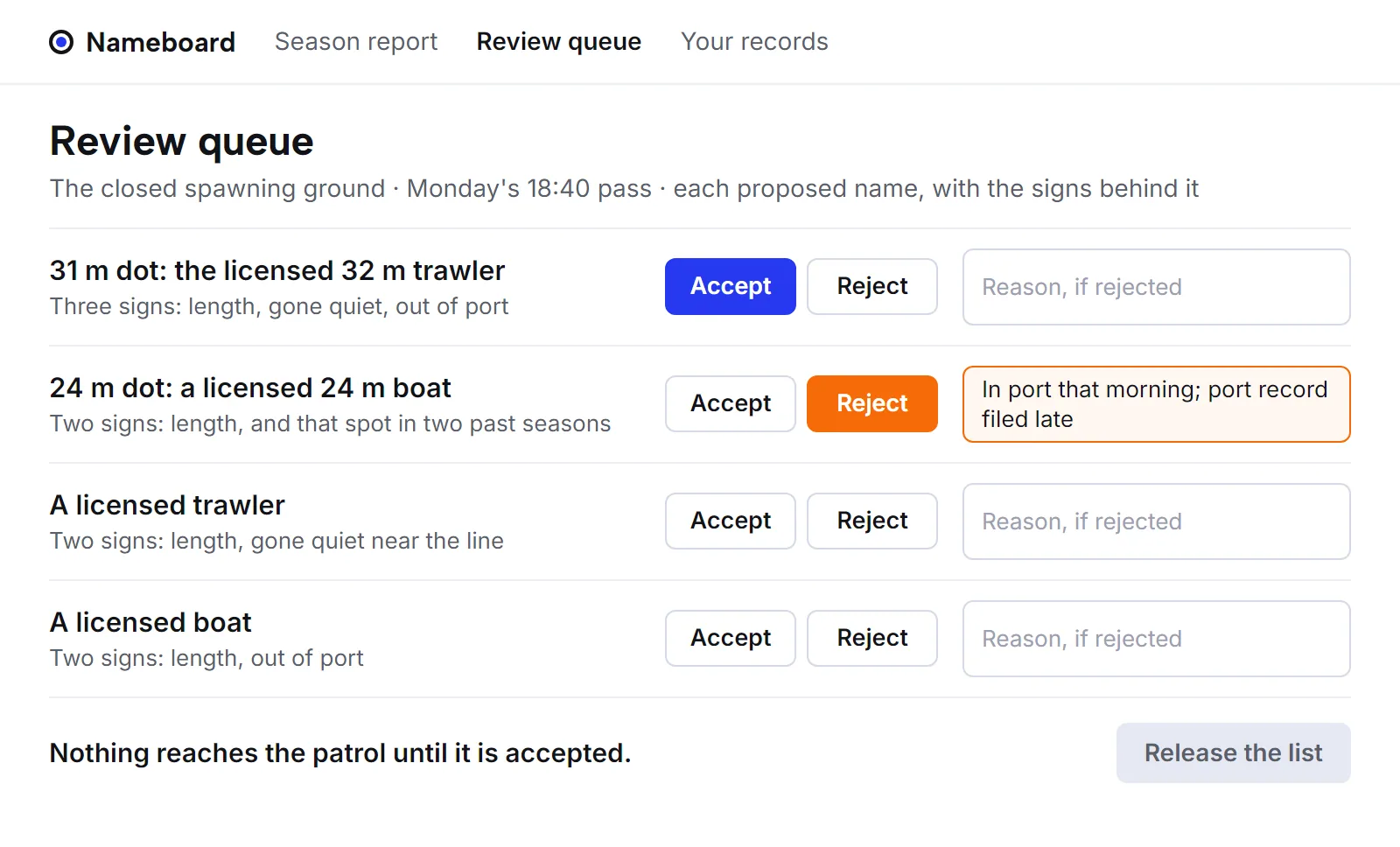
Our staff never accept, reject or release anything, so nothing moves until someone at your agency works the queue the morning after each pass.
Each rejection's written reason tunes the trace for your areas only. A name is a reason to go and look.
Where it stops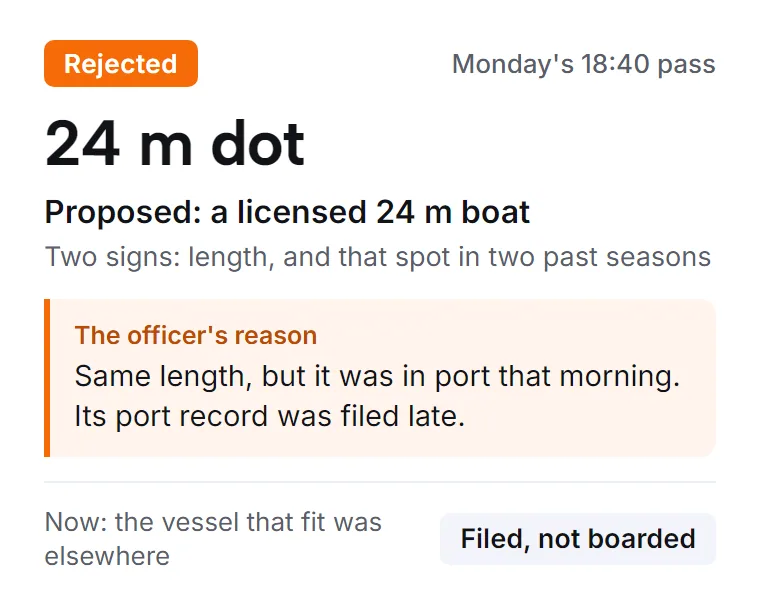
Most wrong names arrive in one of three ways, and the trace meets each differently.
Length alone never names a boat; it is filed, not boarded.
Discounted if the zone's other AIS dropped too.
No name; both listed, and a radio call to each settles it.
In the example week the officer rejects one: a 24 m dot named for a boat already in port, its port record filed late.
The two-sign rule is the main guard, and it costs names: look-alike trawlers end as ties.