A radar pass becomes your patrol's list in five steps
Four of the steps are ours. The fifth, releasing the list, belongs to your officer.
VMS and patrol logs join once your legal office agrees.
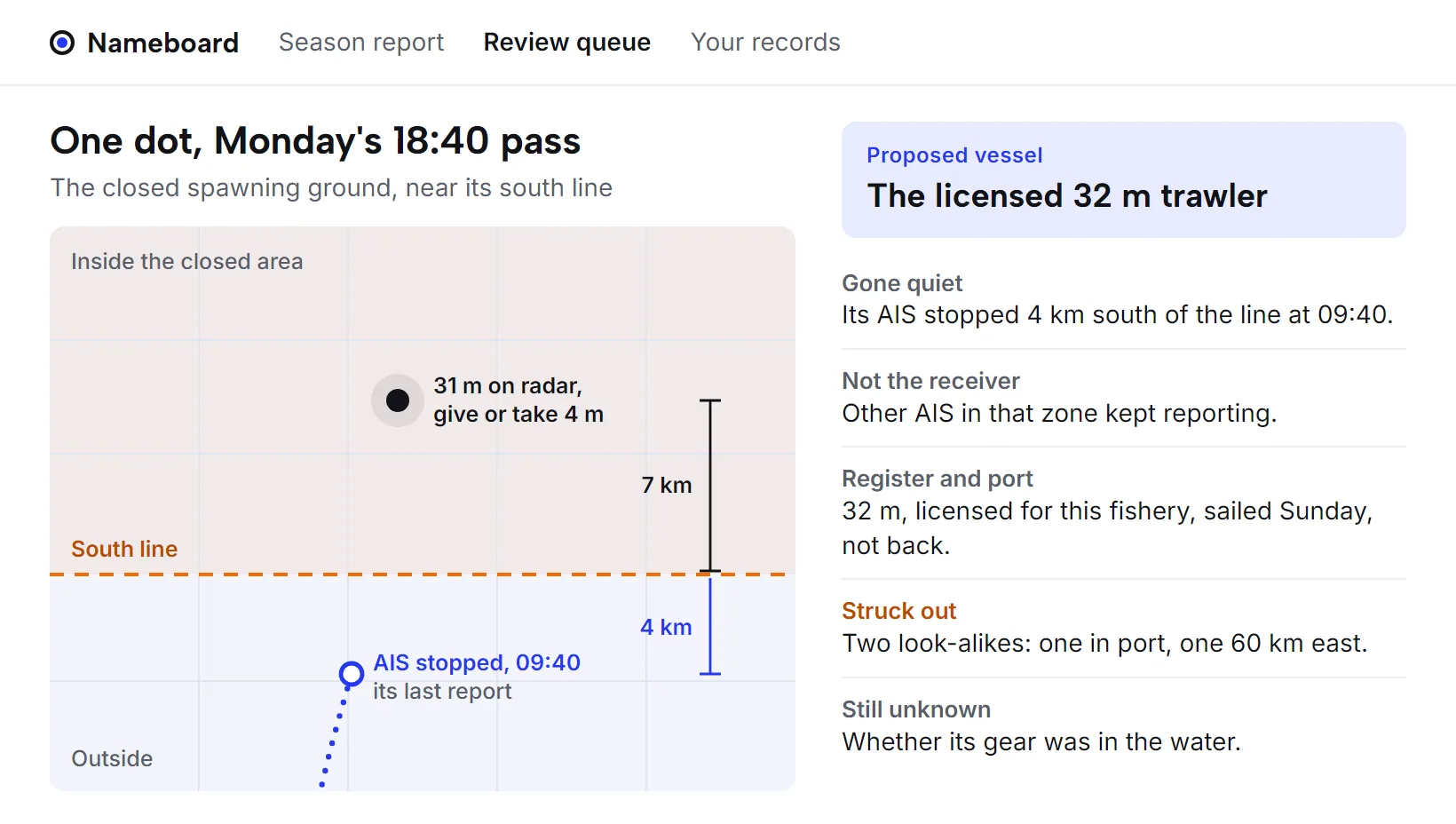
- Radar length31 m, give or take 4 m.
- Gone quietIts AIS stopped 4 km south of the line at 09:40.
- Not the receiverOther AIS in that zone kept reporting.
- Register and port32 m, licensed for this fishery, sailed Sunday, not back.
- Struck outTwo look-alikes: one in port, one 60 km east.
- Still unknownWhether its gear was in the water.
One dot, 7 km inside the south line, traced to a 32 m trawler
From the example week, Monday's 18:40 pass. Three signs point at one licensed boat, and no other candidate comes close.
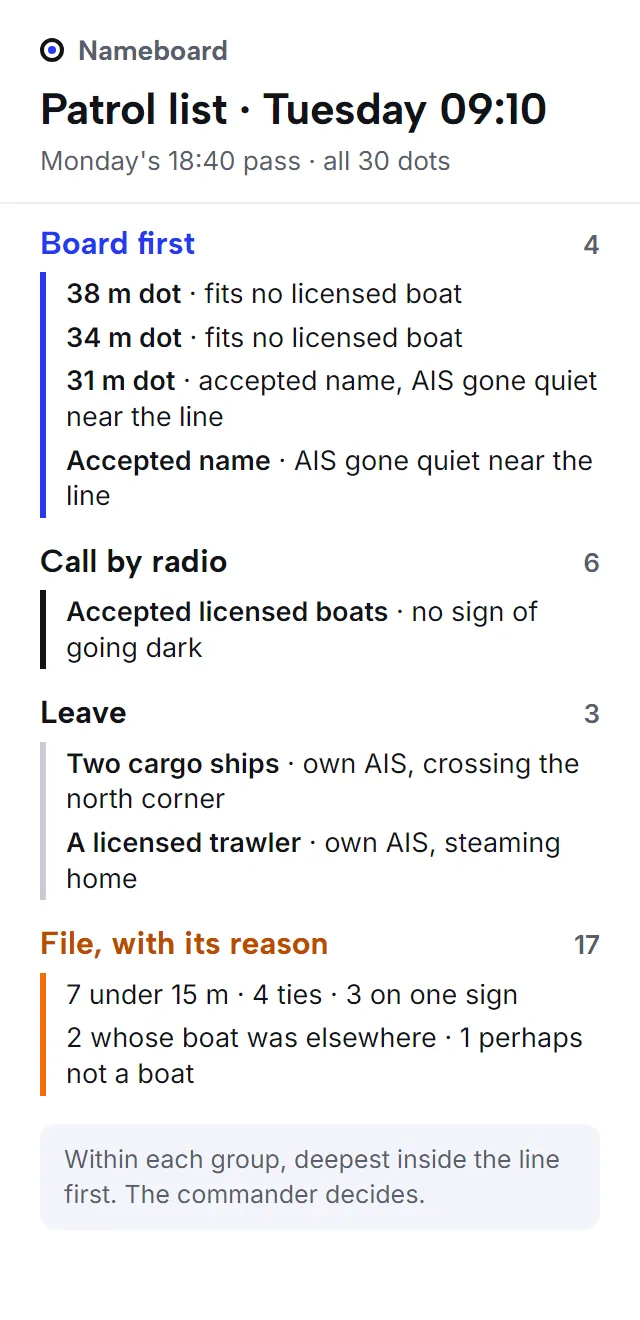
The list ranks the dots by a published rule, and the commander still decides where the day at sea goes
Plain text, light enough for a metered satellite link, with the sign behind each line and the rule printed on every list. Within each group, deepest inside the line comes first.
- Board first
- 15 m or more, fitting no licensed boat; then accepted names gone quiet within 10 km of the line
- Call by radio
- accepted licensed boats, no sign of going dark
- Leave
- boats on their own AIS at transit speed
- File, with its reason
- everything else
A fixed rule will now and then rank a dot your crew would skip.
The commander can board a filed dot or leave a ranked one.
Six hours after a scene is published, every dot in it is waiting for your officer
What the officer takes after that is the agency's own time. The clock starts when the free archive publishes the scene. A pass we deliver late credits 2% of that area's season fee.
6 hours scene published to every dot queued